
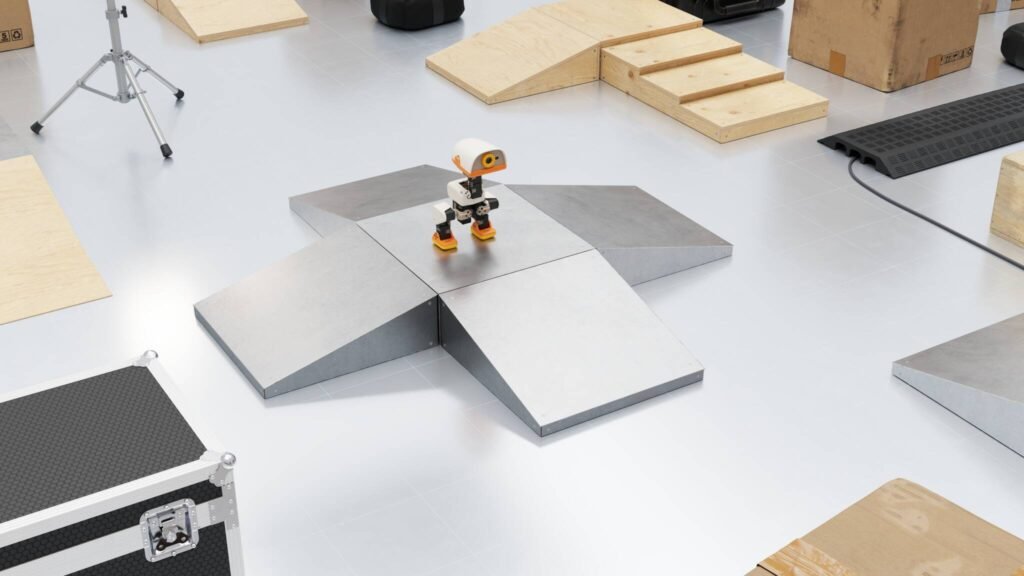
Microduck AI Robot: Features, Technology and Future Potential
At NVIDIA’s GTC Berlin conference in October 2026, CEO Jensen Huang introduced the Microduck, a 10-inch bipedal AI robot developed by Pollen Robotics in collaboration with Hugging Face. This charming robot captivated the audience with its ability to perform commands such as sitting, standing, and even attempting somersaults.
Key Features:
-
Design and Mobility: Standing approximately 25 cm tall and weighing under 900 grams, the Microduck is designed to waddle and can perform movements like sitting, crouching, and attempting somersaults.
-
Sensors and Actuators: Equipped with 15 motors across its legs, neck, and head, the robot features a front-facing camera, depth sensor, two inertial measurement units (IMUs), and an articulated beak capable of picking up light objects.
-
Connectivity: The Microduck includes Wi-Fi, Bluetooth, and NFC capabilities, enabling seamless interaction and control.
-
Battery Life: Powered by a removable 2,600 mAh battery, it offers approximately one hour of runtime, depending on usage.
Pricing and Availability:
Priced at $399, the Microduck is available in four finishes: Cream, Graphite, Lavender, and Sky. Pre-orders began on August 27, 2026, with deliveries expected before Christmas 2026.
Development and Training:
The Microduck’s behaviors were trained using NVIDIA’s Isaac Sim and Isaac Lab, refined in an Omniverse digital twin, and then transferred to the physical robot. This approach allows users to train new movements and behaviors in a simulated environment before running them on the actual device.
The Microduck’s engaging design and interactive capabilities have made it a popular choice among both children and adults, offering a fun and educational experience in robotics.